
Dumpster Rental for Home Renovations in Columbus: What Every Homeowner Needs to Know
Planning a kitchen, bathroom, or basement renovation? This complete guide covers everything from what you absolutely can't throw in a dumpster to sizing tips, timing, and how to avoid the mistakes that cost homeowners hundreds in unexpected fees.

The $400 Mistake That Almost Ruined a Kitchen Renovation
A couple in Powell called me last spring, three weeks into their kitchen renovation. Their contractor had already rented a dumpster from another company, filled it with demolition debris, and scheduled pickup. Everything seemed fine.
Then they got the bill: $723 instead of the quoted $299.
"They're charging us $424 in contamination fees," the homeowner told me, frustrated and confused. "We didn't know we couldn't throw paint cans in there. Or the old microwave. Or the caulk tubes. The website never said anything about it."
Here's what happened: their contractor had tossed half-empty paint cans, an old microwave with electrical components, spray foam containers, and chemical cleaning supplies into the dumpster along with the legitimate renovation debris—cabinets, drywall, flooring. When the dumpster company picked it up and took it to the dump, they were refused disposal because of the prohibited materials.
The company charged them for:
- Sorting and separating prohibited materials: $175
- Disposal of hazardous waste at specialized facility: $149
- Additional trip to correct facility: $100
Total unexpected cost: $424. And the worst part? They were still three weeks away from finishing their renovation. They needed the dumpster again, but now they were gun-shy and uncertain about what they could actually throw away.
That's when they called me.
I delivered a new dumpster the same day, walked them through exactly what could and couldn't go in it, gave them a printed list to share with their contractor, and made myself available by phone if any questions came up during the rest of their project.
Their final bill from Streamline Dumpsters: $344.52. No surprises. No contamination fees. No additional charges.
This happens more often than you'd think, and it's almost always preventable. That's why I'm writing this guide—to make sure your renovation doesn't get derailed by dumpster rental issues you never saw coming.
What You Absolutely Cannot Put in a Dumpster (And Why It Matters)
Let's start with the most important thing you need to know about renting a dumpster for your renovation: not everything that comes out of your house can go into a dumpster.
This catches homeowners and contractors off guard constantly. Your renovation is generating debris. You have a big metal container sitting in your driveway specifically designed for debris. It seems logical that everything should go in there.
But disposal facilities have strict regulations about what they can accept, and if prohibited materials show up in your dumpster, you're looking at contamination fees ranging from $150 to $500 or more—on top of your rental cost.
Prohibited Materials: The Complete List for Renovations
Here's what you cannot throw in a residential dumpster during your renovation:
Liquids & Chemicals
- Paint (liquid) - Even if the can is "almost empty." If there's liquid paint inside, it can't go in the dumpster.
- Paint thinner, mineral spirits, solvents - Any chemical liquids used for cleaning or thinning
- Adhesives and glues (liquid) - Construction adhesive, tile adhesive, wood glue if still liquid
- Stains and varnishes (liquid) - Wood stains, polyurethane, lacquer if not fully dried
- Chemical cleaners - Drain cleaners, oven cleaners, heavy-duty solvents
- Pesticides, herbicides, fertilizers - Any garden chemicals or pest control products
Pressurized Containers
- Aerosol cans - Spray paint, WD-40, expanding foam, cooking spray, air fresheners
- Propane tanks - Even small camping-size tanks
- Fire extinguishers - Contain pressurized chemicals
- Oxygen tanks or compressed gas cylinders - Medical or industrial
Electronics & Appliances with Certain Components
- Anything with refrigerant - Refrigerators, freezers, air conditioners, dehumidifiers (freon must be removed by certified tech first)
- Fluorescent light bulbs and tubes - Contain mercury
- CRT monitors and old TVs - Contain hazardous materials; require e-waste recycling
Other Hazardous Materials
- Asbestos-containing materials - Old insulation, floor tiles, popcorn ceiling (requires special handling and disposal)
- Batteries - Car batteries, rechargeable batteries, lithium batteries
- Motor oil and automotive fluids - Oil, antifreeze, transmission fluid, brake fluid
- Tires - Passenger vehicle or truck tires
- Medical waste - Needles, biohazardous materials
What About Dried Paint Cans?
Completely dried paint cans are usually acceptable. If the paint is 100% solid (no liquid remaining), most facilities will accept the cans. The test: if you can leave the lid off for 48 hours and the paint has hardened to a solid mass, it's generally okay.
Pro tip: If you have half-full paint cans, pour the remaining paint into cardboard boxes lined with plastic bags, let it dry out completely (mix in cat litter to speed up the process), then dispose of the solidified paint. The empty or fully-dried cans can then go in the dumpster.
What You CAN Put in Your Renovation Dumpster
Now for the good news. The vast majority of renovation debris is perfectly fine for dumpster disposal:
Construction & Demolition Materials
- Drywall and plaster
- Wood framing, trim, flooring, and cabinetry
- Tile, ceramic, and porcelain
- Concrete and masonry (up to reasonable amounts)
- Carpet and carpet padding
- Vinyl and laminate flooring
- Roofing shingles and materials
- Windows and doors (glass is fine)
- Insulation (non-asbestos)
- Metal fixtures, pipes, and hardware
Furniture & Household Items
- Old furniture and mattresses
- Countertops (laminate, butcher block, stone)
- Cabinets and vanities
- Sinks, toilets, bathtubs (porcelain and fiberglass)
Appliances (With Exceptions)
- Stoves and ranges (electric and gas)
- Dishwashers
- Washing machines and dryers
- Microwaves (despite what some companies claim—these are generally acceptable)
- Water heaters
Refrigerators and freezers can go in the dumpster only if a certified technician has removed the freon/refrigerant first. Most appliance recyclers will do this for free or a small fee, and some will even pick them up for free.
Why This Matters More Than You Think
Contamination fees aren't the only reason to care about prohibited materials. Here's what else can happen:
- Pickup refusal - The driver might refuse to pick up your dumpster if they see prohibited items, leaving you with a full dumpster sitting in your driveway and delaying your project
- Environmental violations - You could be held responsible for environmental damage if hazardous materials leak or contaminate the disposal site
- Safety hazards - Aerosol cans can explode under pressure; chemicals can leak and create fumes
- Legal liability - Improper disposal of certain materials can result in fines from environmental agencies
The couple in Powell learned this lesson the expensive way. You don't have to.
Kitchen Renovations: What to Expect with Your Dumpster
Kitchen renovations are one of the most common projects I see, and they generate a predictable amount of debris—if you know what you're tearing out.
Typical Kitchen Renovation Debris
A standard kitchen renovation in a Columbus-area home usually involves:
- Removal of existing cabinets (upper and lower)
- Countertop removal (laminate, granite, or butcher block)
- Flooring removal (vinyl, tile, or hardwood)
- Possible backsplash tile removal
- Old appliances (stove, dishwasher, possibly microwave)
- Light fixtures and hardware
- Some drywall if you're reconfiguring layout
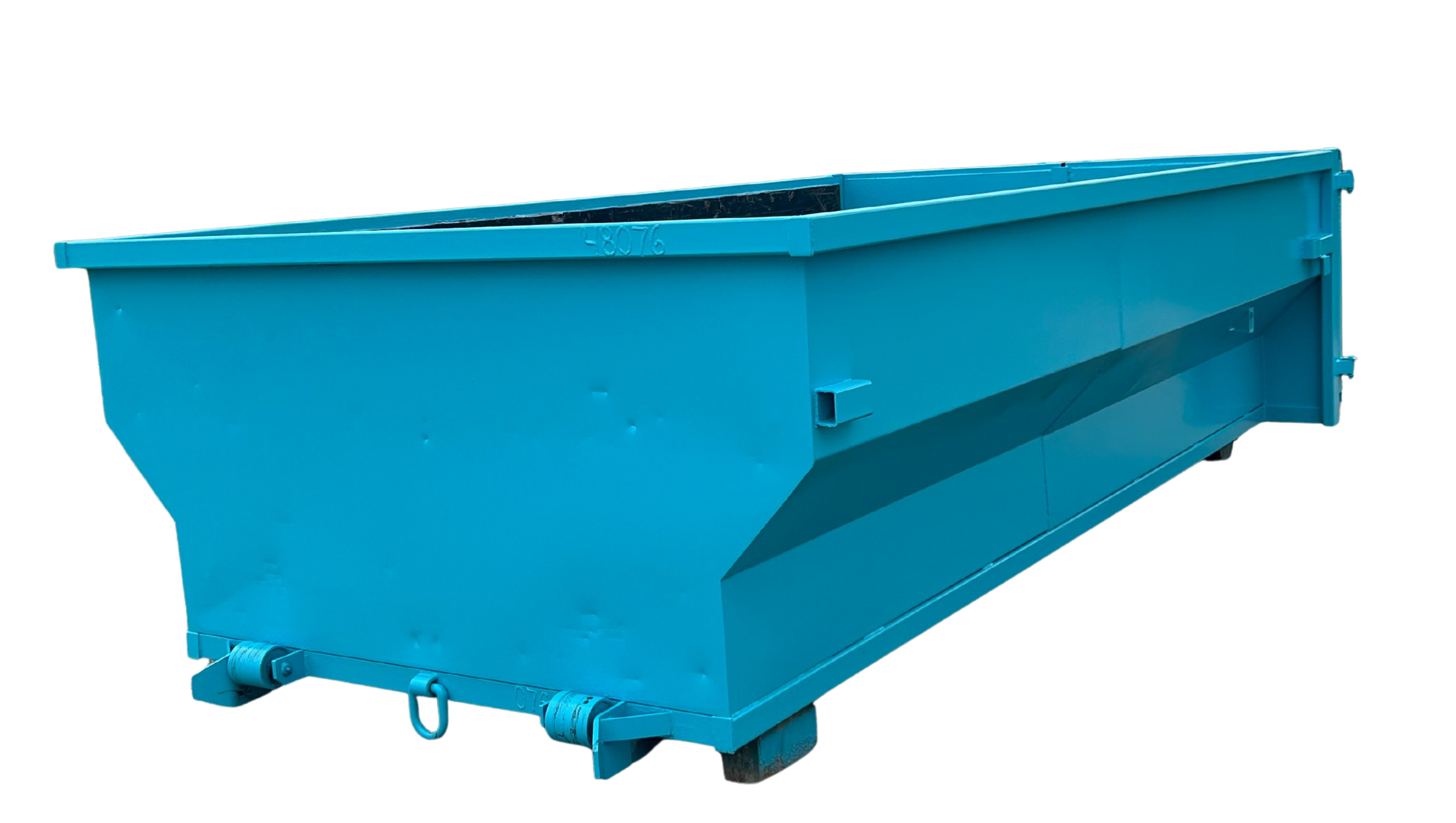
How much debris is that? For a typical 10' × 12' kitchen renovation where you're replacing cabinets, countertops, and flooring, you're looking at roughly 3-5 cubic yards of debris. That fits comfortably in a 14-yard dumpster with plenty of room to spare for packaging materials, unexpected waste, and any additional demo work.
Common Kitchen Renovation Prohibited Items
The items that cause problems in kitchen renovations:
- Under-sink cleaning supplies - Drain cleaners, oven cleaners, multi-surface sprays with chemical residue
- Leftover paint from previous updates - That cabinet paint from 5 years ago is probably still in the garage
- Refrigerator - Can't go in until freon is removed (if you're replacing it)
- Fluorescent under-cabinet lighting - The tubes contain mercury
- Aerosol cooking sprays - If they're under the sink or in cabinets being demoed
Kitchen Renovation Dumpster Sizing
A 14-yard dumpster is perfect for most kitchen renovations. Unless you're doing a complete gut-job where you're removing walls, subflooring, and extensive plumbing/electrical, a 14-yarder will easily handle your cabinet, countertop, and flooring debris.
See our complete dumpster sizing guide for detailed capacity information and project-specific recommendations.
Bathroom Renovations: The Compact-But-Heavy Challenge
Bathroom renovations generate less volume than kitchens, but the debris is often heavier due to tile, fixtures, and wet/saturated materials.
Typical Bathroom Renovation Debris
- Bathtub or shower surround removal (fiberglass, acrylic, or cast iron)
- Tile removal (floor and wall)
- Vanity and countertop
- Toilet and sink fixtures
- Drywall (often water-damaged around tub/shower)
- Flooring (tile or vinyl)
- Light fixtures and mirrors
How much debris is that? A standard bathroom (5' × 8') renovation typically generates 2-4 cubic yards of debris. The weight can vary significantly depending on whether you're removing a cast iron bathtub (300-500 lbs) or a fiberglass shower surround (50-100 lbs).
Common Bathroom Renovation Prohibited Items
What catches homeowners off guard in bathroom renovations:
- Cleaning supplies under the sink - Toilet bowl cleaners, drain openers, mildew removers
- Medications and personal care products - Old prescriptions, aerosol hairsprays and deodorants
- Old paint or caulk - Touch-up paint from previous updates, liquid caulk tubes
- Aerosol air fresheners - Still pressurized, can't go in dumpster
Bathroom demo is notorious for generating water-damaged materials. If you're tearing out drywall around a shower that's been leaking, that drywall is going to be heavy and possibly moldy. This doesn't make it prohibited—it just means it weighs more than dry drywall. Plan accordingly.
Bathroom Renovation Dumpster Sizing
A 14-yard dumpster is more than enough for a single bathroom renovation. Even if you're doing a master bathroom with double vanities, separate shower and tub, and extensive tile removal, you'll have plenty of capacity. Most bathroom renovations use less than half of a 14-yard dumpster's space.
If you're renovating multiple bathrooms simultaneously, a single 14-yarder can typically handle 2-3 bathrooms worth of debris.
Basement Finishing & Remodeling: The Volume Challenge
Basement projects are different. If you're finishing an unfinished basement, you're not generating much demo debris—mostly packaging from new materials. But if you're remodeling an existing finished basement, you could be looking at substantial debris volume.
Typical Basement Remodeling Debris
- Existing drywall and framing
- Drop ceiling tiles and grid system
- Carpet and padding (often covering large square footage)
- Paneling or old finishes
- Old bathroom fixtures (if there's a basement bath)
- Water-damaged materials (unfortunately common in basements)
- Old insulation
How much debris is that? This varies wildly based on basement size and what you're removing. A 600 sq ft finished basement being completely gutted could generate 8-12 cubic yards of debris. A 1,200 sq ft basement? You're potentially looking at needing multiple dumpsters or very careful planning.
Common Basement Renovation Prohibited Items
Basements are storage areas, which means they often contain forgotten prohibited items:
- Old paint cans stored in basement - That collection of half-empty paint from the last 10 years of touch-ups
- Pesticides and garden chemicals - Often stored in basements over winter
- Automotive fluids - Motor oil, antifreeze stored from garage overflow
- Old electronics - That CRT TV you've been meaning to get rid of since 2008
- Fluorescent shop lights - Common in basements, tubes contain mercury
- Dehumidifiers - If they contain refrigerant (many do), freon must be removed first
Here's the thing about basements: people use them as long-term storage for things they don't know what to do with. When you're doing a renovation and clearing everything out, you're going to uncover items that have been sitting there for years—and many of them can't go in a dumpster.
My recommendation: Do a basement walkthrough before your demo starts. Identify everything that's in storage. Sort out prohibited items and make a plan for disposing of them separately before the dumpster arrives. This saves you from the frustration of having a full dumpster and a pile of prohibited items you can't do anything with.
Basement Renovation Dumpster Sizing
For a typical basement remodel (600-800 sq ft), a 14-yard dumpster should be sufficient. For larger basements (1,000+ sq ft) or basements where you're removing extensive built-ins, multiple rooms of drywall, or large amounts of water-damaged material, you might need to plan for two dumpster loads or consider how you'll consolidate debris.
The good news: you can always call mid-project for a pickup and new delivery if you fill the first dumpster. With same-day delivery, this doesn't have to delay your project.
Timing Your Dumpster Rental for Renovations
One of the most common questions I get: "When should I schedule my dumpster delivery?"
The answer depends on your project timeline and whether you're DIY-ing or using contractors.
For DIY Renovations
Schedule delivery for the day before you start demolition. You want the dumpster in place before you start creating debris. Nothing's worse than ripping out a kitchen worth of cabinets and realizing the dumpster isn't arriving until tomorrow—now you've got debris piles everywhere and nowhere to put them.
Our rentals include 7 days. For most kitchen or bathroom renovations, that's plenty of time for demo, debris removal, and even some of the reconstruction debris (packaging, cutoffs, etc.).
If your project is going to take longer than 7 days, that's fine—we can extend the rental. Just give me a call when you know you need more time. No games, no penalties for asking.
For Contractor-Led Renovations
Coordinate with your contractor on timing. Many contractors prefer to have the dumpster delivered at the start of the project so they can handle debris continuously rather than letting it pile up.
Some contractors will handle dumpster rental themselves (and include it in their bid). Others expect you to arrange it separately. Make sure you're clear on who's responsible for the rental before the project starts.
If you're handling the rental, ask your contractor:
- What day does demo start?
- How long will the demolition phase last?
- Will they need the dumpster available for the reconstruction phase too, or just demo?
- Are there any prohibited materials they're aware of from the scope of work?
Same-Day Delivery for Unexpected Needs
Sometimes renovations reveal surprises. You open up a wall and discover water damage. You pull up flooring and find another layer underneath. Suddenly you need more capacity than you planned for.
That's where same-day delivery becomes valuable. If you realize mid-project that you need a dumpster (or a second one), I can typically deliver the same day if you call before 2 PM. This keeps your project moving instead of stalling for days while you wait for delivery.
I've delivered dumpsters to renovation sites where contractors uncovered asbestos, termite damage, or structural issues that required significantly more demo than originally planned. Being able to get a dumpster delivered within hours keeps those projects on track.
Dumpster Placement for Home Renovations
Where you put the dumpster matters more than most people realize. Poor placement can block access to your house, damage your property, or create safety hazards.
Ideal Dumpster Placement
The best spot is usually your driveway, as close to the work area as possible while still leaving room for your vehicle to pass if needed.
Here's what I look for when helping customers choose placement:
- Proximity to work area - The closer the dumpster is to where you're demoing, the less distance you're carrying heavy debris. Stairs and long walks add up fast when you're making dozens of trips.
- Clear access for delivery and pickup - Our truck needs to be able to drive up, place the dumpster, and pick it up without getting stuck or causing damage. Low-hanging branches, narrow driveways, and tight turns can all create issues.
- Level, stable surface - Driveways are ideal because they're designed to support vehicle weight. Grass can work but risks rutting, especially if the ground is wet. We use boards under the dumpster to distribute weight and protect your driveway.
- Permit considerations - If you need to place the dumpster in the street, you'll likely need a permit from your city. See our Ohio permit guide for city-specific requirements in Dublin, Hilliard, Powell, and surrounding areas.
What to Avoid
- Blocking the only entrance to your house - You still need to get in and out, and contractors need access for material deliveries
- Overhead power lines - Our delivery truck lifts the dumpster up and over—power lines create a serious safety hazard
- Septic systems or underground utilities - A loaded dumpster can weigh several tons. Don't place it over septic tanks, drain fields, or buried utility lines.
- Soft ground after rain - Even with boards, a fully loaded dumpster can sink into saturated soil and create ruts or get stuck
When you book with Streamline Dumpsters, I'll talk through placement with you before delivery. If I see any concerns when I arrive, I'll point them out and we'll figure out the best spot together. I've been doing this long enough to spot potential problems before they happen.
What Renovation Dumpster Rental Actually Costs in Columbus
Let's talk about what you'll actually pay, because this is where a lot of companies play games.
Our pricing is straightforward: $319 base price + 8% Ohio sales tax = $344.52 total.
That includes:
- 14-yard dumpster
- Delivery to Dublin, Hilliard, Powell, Upper Arlington, Worthington, Plain City, and Columbus
- 7 days of rental time
- Up to 2 tons (4,000 lbs) of debris
- Pickup and disposal
- Same-day delivery available at no extra charge
What's NOT included (the only additional costs you might encounter):
- Weight overage: $0.03 per pound if you exceed 4,000 lbs (this is rare for standard renovations)
- Extended rental beyond 7 days: We're flexible here—call to discuss if you need more time
- Prohibited material contamination fees: Only charged if you put prohibited items in the dumpster after we've clearly explained what's not allowed
That's it. No fuel surcharges. No "environmental fees." No rush delivery fees even for same-day service. No surprise charges when you get your final bill.
For complete pricing details and comparisons showing how we're different from companies that hide fees, see our transparent pricing guide.
How to Avoid Renovation Dumpster Rental Mistakes
After years of delivering dumpsters to renovation sites across Columbus and the surrounding suburbs, I've seen the same mistakes repeatedly. Here's how to avoid them:
Mistake #1: Not Clearing Prohibited Items Before Demo Starts
Solution: Before your dumpster arrives, do a walkthrough of the area you're renovating. Remove all prohibited items—cleaning supplies, paint cans, aerosols, electronics with refrigerant. Set them aside for separate disposal. Give your contractor a printed list of prohibited items (I provide this with every delivery).
Mistake #2: Underestimating Debris Weight
Solution: If your renovation involves tile removal, concrete work, water-damaged drywall, or cast iron fixtures, call me before you book. I can help you estimate weight based on what you're removing. It's better to know upfront if you're likely to exceed the 2-ton limit than to be surprised by overage fees.
Mistake #3: Poor Timing on Delivery
Solution: Schedule delivery for the day before demo starts, not the day of. This gives you flexibility if your contractor runs early or if you're doing DIY work and want to start first thing in the morning.
Mistake #4: Not Communicating with Contractors About the Dumpster
Solution: Make sure your contractor knows where the dumpster will be, what can go in it, and when it's being picked up. If they're used to working with other rental companies that have different rules, they might not know our specific guidelines.
Mistake #5: Waiting Until the Last Minute to Book
Solution: While we offer same-day delivery, it's better to book a few days ahead if your schedule is fixed. This guarantees availability and lets you plan your project timeline with confidence.
Questions to Ask Before You Book a Renovation Dumpster
Not all dumpster rental companies operate the same way. Here are the questions you should ask any company before booking:
- "What's included in your quoted price?" - Make them list everything. Delivery, pickup, disposal, rental period, weight allowance. If they're vague or say "it depends," that's a red flag.
- "What additional fees might I encounter?" - Any honest company will tell you about overage fees, contamination fees, and other potential charges upfront.
- "What items are prohibited, and what happens if they end up in the dumpster?" - You need a clear list and a clear answer about fees.
- "Can I extend my rental if my project takes longer than expected?" - Renovations often run over schedule. Flexibility matters.
- "Do you offer same-day delivery?" - Projects change. You might need a dumpster faster than you expected.
- "Will I be working with a local company or a national chain?" - There's value in working with someone local who understands Columbus area regulations and can respond quickly to problems.
When you call Streamline Dumpsters, I answer these questions before you even ask them. Transparency isn't a selling point for me—it's how I run my business.
Why Renovation Dumpster Rental Matters to Your Project Success
Here's what I've learned from thousands of renovation deliveries: the dumpster rental is a small part of your project budget, but problems with it can derail your entire timeline and cost you significantly more than you saved by choosing the cheapest option.
That couple in Powell who paid $424 in contamination fees? They saved $23 by choosing a competitor over us. Then they paid $424 in penalties. Net loss: $401, plus the stress and project delay.
A bathroom renovation in Dublin where the homeowner waited four days for dumpster delivery from a company that "forgot" to schedule them? The contractor billed extra for the delay because he had to work around debris piles and couldn't complete certain phases. Extra cost: $600 in contractor time.
A kitchen renovation in Hilliard where the company showed up with a 10-yard dumpster instead of the 14-yard that was ordered? The homeowner had to rent a second dumpster mid-project because the smaller one filled up during demolition. Extra cost: $350 for the second rental that shouldn't have been necessary.
These aren't rare stories. This happens constantly in the dumpster rental industry because too many companies treat it as a transactional commodity business rather than a service that requires attention to detail.
This business is my life. I don't have shareholders pressuring me to maximize profit per rental. I don't have a call center in another state handling customer questions. I don't have policies that prioritize efficiency over getting it right.
When you book a dumpster from Streamline Dumpsters for your renovation, you're getting:
- Direct communication with me, the owner
- Clear, written information about what can and cannot go in the dumpster
- Same-day delivery if you need it, at no extra charge
- Honest pricing with no hidden fees
- Local service from someone who understands Columbus-area regulations and logistics
- Flexibility when your project doesn't go exactly as planned
Ready to Book Your Renovation Dumpster?
If you're planning a kitchen, bathroom, or basement renovation in the Columbus area, I'd be happy to talk through your project and make sure you have what you need.
You can book online right now if you're ready, or call me at (614) 636-2343 if you want to discuss specifics first. I'd rather spend ten minutes on the phone making sure you have the right information than have you discover a problem mid-project.
Questions I can help answer:
- Whether a 14-yard dumpster is the right size for your specific project
- How to handle prohibited items you've discovered in your renovation space
- Whether your planned placement location will work for delivery and pickup
- Timing coordination with your contractor's schedule
- Any city-specific permit requirements for your area
Base pricing: $319 + 8% tax = $344.52 total. 14-yard dumpster, same-day delivery available, 7 days included, up to 2 tons. See our terms and conditions for complete details.
Renovations are stressful enough without worrying about dumpster rental problems. Let's make sure that's one thing you don't have to think about.
Serving Dublin, Hilliard, Powell, Upper Arlington, Worthington, Plain City, and Columbus. Family-owned, locally operated, and here when you need us.
Planning a Kitchen, Bathroom, or Basement Renovation?
Get your dumpster delivered before demo starts. Same-day delivery available. Honest pricing with no hidden fees. Direct access to the owner for any questions.
Book Your Dumpster NowOr call to discuss your project: (614) 636-2343
Related Articles
How to Choose the Right Dumpster Size
Detailed sizing guide for every type of home project in Columbus.
Transparent Pricing for Columbus Dumpster Rentals
Understand exactly what you're paying for—no hidden fees, no surprises.
Same-Day Dumpster Delivery in Columbus
How we guarantee fast, reliable delivery when you need it most.