
How to Maximize Space in Your Dumpster Rental: The Loading Mistakes That Cost Columbus Homeowners Hundreds
Poor loading wastes dumpster space and costs you money. Learn the common mistakes that force homeowners to rent second dumpsters or pay overage fees—and how to avoid them.
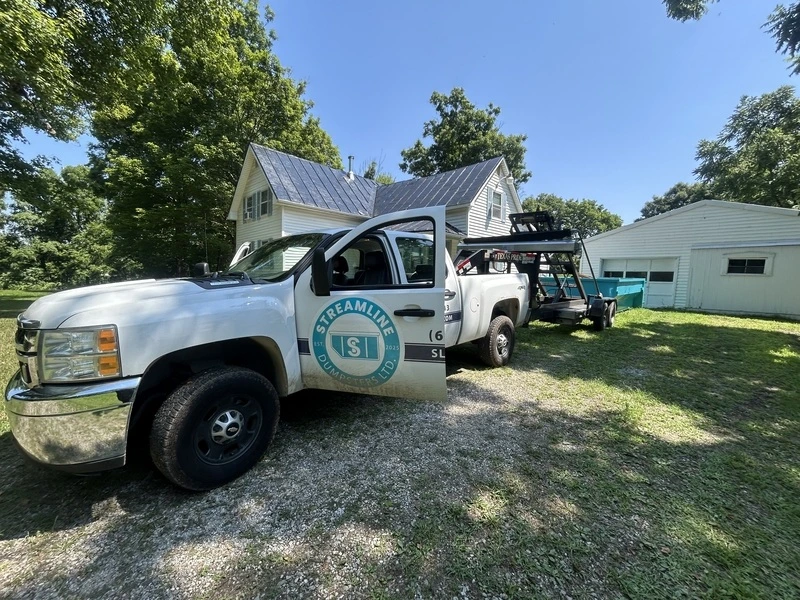
The $345 Phone Call I Get Too Often
Last month, a homeowner in Worthington called me on day 5 of his basement cleanout. His 14-yard dumpster was sitting in his driveway, filled to what looked like capacity. But he still had a quarter of his basement debris left to clear out.
"I need to book a second dumpster," he told me. "This one's full and I've still got probably another 3 or 4 yards of stuff to get rid of."
I asked him to send me a photo of the dumpster.
When I saw the image, the problem was immediately obvious. The dumpster looked full from the top, but the loading was catastrophically inefficient. Large, intact furniture pieces. Unbroken drywall sheets leaning at angles. Bulky items creating massive air pockets. Cabinet frames still assembled. The entire load was maybe 40% actual debris and 60% wasted air space.
"Before you book a second dumpster," I told him, "try redistributing what's in there. Break down the furniture. Flatten the drywall. Nest smaller items inside hollow ones. I think you'll be surprised how much more fits."
He called me back three hours later.
"I can't believe it. I fit everything. There's still space left over."
He saved $345—the cost of renting and disposing of a second dumpster he didn't need. And it took him less than half a day of reorganizing to avoid that expense.
This happens constantly. Homeowners rent a dumpster, load it the way that seems intuitive, and then discover they've run out of space with debris still remaining. They assume they underestimated their project size. The reality? They wasted the capacity they paid for through poor loading decisions.
Why Loading Order Matters More Than You Think
Most people approach dumpster loading the same way they'd load a pickup truck or throw items in a trash can: grab whatever's closest, toss it in, move on to the next piece. This works fine for small-scale disposal.
But when you're filling a 14-yard dumpster—which holds roughly 14 cubic yards (378 cubic feet) of debris—poor loading strategy can waste 30-50% of your capacity.
Here's the math: A 14-yard dumpster costs $344.52 with Streamline Dumpsters (including tax). If you waste 40% of the capacity through poor loading, you're essentially throwing away $138 worth of space you paid for. And if that wasted space forces you to rent a second dumpster? You're now paying $689.04 instead of $344.52.
The financial impact of loading mistakes:
- Needing a second dumpster: Additional $344.52 (100% cost increase)
- Weight overage from poor distribution: $0.03 per pound over the 2-ton limit
- Extended rental while you reorganize and reload: Variable daily fees depending on company policy
- Contractor delays if dumpster fills too quickly: Potential hundreds in additional labor costs
These costs are completely avoidable. The difference between efficient and inefficient loading isn't specialized knowledge or extra tools—it's awareness of what not to do.
The Most Expensive Loading Mistake: Wrong Order
The number one mistake I see—the one that wastes more space than anything else—is loading items in the wrong order.
Here's what happens: Homeowners start their project and immediately begin throwing debris into the dumpster as they generate it. First comes the bulky furniture. Then some drywall pieces. Then smaller debris. Then more bulky items. The dumpster fills from bottom to top in whatever random order the project creates debris.
This creates a chaotic, inefficient stack with massive air gaps, awkward angles, and wasted space throughout.
What Wrong Loading Order Looks Like
I picked up a dumpster last fall in Dublin from a garage cleanout. The homeowner had filled it this way:
- Bottom layer: An old couch (intact, not broken down), leaning at an angle
- Middle layer: Loose 2x4 scraps, random boxes, some drywall pieces propped vertically
- Top layer: Bulky yard waste, bundled but not compressed, sitting on top of everything
The result? The dumpster appeared full, but when I tilted it for pickup, everything shifted and settled, revealing at least 3-4 yards of unused space that had been trapped as air pockets around and inside the poorly arranged items.
The homeowner had rented a second dumpster the day before pickup because he thought the first one was at capacity. When he saw how much empty space appeared when the load shifted, he realized he'd paid for a second dumpster unnecessarily.
Cost of this mistake: $344.52 for the unnecessary second rental.
Why Loading Order Matters: The Physics of Wasted Space
When you load a dumpster incorrectly, you create two types of wasted space:
1. Structural air pockets - These form when large, rigid items create voids that can't be filled. A couch loaded early creates a hollow cavity underneath and around it that's nearly impossible to fill effectively with later debris.
2. Inaccessible gaps - Once you've loaded the bottom and middle of the dumpster poorly, you can't go back and reorganize without unloading everything. Items become locked in place by the weight and arrangement of everything above them.
The financial impact compounds throughout your project. You're not just losing space at the bottom—you're losing it at every level as poorly placed items create cascading inefficiency.
The Second Costliest Mistake: Not Breaking Down Large Items
Furniture, cabinets, and other assembled items are space killers. An intact couch can consume 15-20 cubic feet of dumpster space while containing maybe 3-4 cubic feet of actual material. The rest is air.
I see this constantly with renovation projects. Homeowners remove old cabinets and throw them in whole. Pull out furniture and toss it in intact. Rip out old fencing or decking and load full panels.
The cost impact is real. A kitchen renovation in Powell last spring generated about 8 cubic yards of actual material. But because the contractor loaded intact cabinets, unbroken countertops, and whole furniture pieces, it consumed 13+ yards of space. The homeowner needed a second dumpster for the remaining debris.
Cost of not breaking down items: $344.52 for the second dumpster that proper breakdown would have eliminated.
The Worst Offenders: Items That Waste the Most Space When Left Intact
These items create the largest air pockets and waste the most capacity when not broken down:
Furniture
- Couches and sofas: Can take up 15-25 cubic feet intact; reduce to 4-6 cubic feet when broken down
- Chairs and recliners: 8-12 cubic feet intact; 2-3 cubic feet broken down
- Tables: 10-15 cubic feet with legs attached; 3-5 cubic feet with legs removed and top broken
- Dressers and cabinets: 12-18 cubic feet intact; 4-6 cubic feet collapsed
- Mattresses and box springs: 20-30 cubic feet intact; 6-8 cubic feet broken or cut
Building Materials
- Drywall sheets: Full sheets create massive air pockets; broken pieces stack flat
- Doors: 8-10 cubic feet when loaded flat with hardware; 3-4 cubic feet when broken
- Fencing panels: 12-15 cubic feet per panel intact; 3-5 cubic feet broken into sections
- Decking boards: Long boards bridge across the dumpster creating voids; broken sections stack tightly
Renovation Debris
- Kitchen cabinets: 15-25 cubic feet per cabinet set intact; 5-8 cubic feet broken down
- Vanities: 8-12 cubic feet intact; 3-4 cubic feet broken down
- Countertops: Large slabs create bridging and air pockets; broken sections nest together
Breaking these items down doesn't require special tools. A hammer, pry bar, and reciprocating saw handle most furniture and cabinetry. Drywall breaks easily with a stomp or hit. The time investment is minimal compared to the cost of wasted space.
The Hidden Expense: Loading Lightweight Bulky Items First
This mistake is subtle but costly. Homeowners load bulky, lightweight materials early in the project—yard waste, insulation, carpet padding, packing materials—and then try to load heavier items on top.
The problem: The lightweight materials compress and shift under the weight of heavier debris, creating unstable loads and wasted space as items settle unevenly.
Worse, once compressed, these materials expand partially when weight is removed, preventing you from efficiently using the space they occupy.
What This Looks Like in Practice
A basement finishing project in Hilliard last year illustrates this perfectly. The homeowner loaded their dumpster in this order:
- Carpet and padding from the entire basement (bulky, lightweight)
- Insulation removed from walls (extremely low density)
- Drywall pieces (heavy, rigid)
- Concrete blocks from a partial wall removal (very heavy)
By day 3, the carpet and insulation at the bottom had compressed to maybe 30% of their original volume under the weight of drywall and concrete. But the compression was uneven, creating voids and air pockets. The concrete blocks had settled at awkward angles. The entire load became unstable and inefficiently packed.
The homeowner called me saying the dumpster was full but they still had debris remaining. When I looked at the load, I could see the problem: massive wasted space from compression and poor layering.
They needed a second dumpster. Cost: $344.52.
If they'd loaded heavier materials first and lighter materials last, everything would have fit in a single rental with room to spare.
The Financial Cost of Poor Layering
Loading lightweight items first doesn't just waste space—it can also create weight distribution problems that lead to overage fees.
When heavy items compress lightweight materials unevenly, weight concentrates in certain areas of the dumpster. This can push your total weight over the 2-ton (4,000 lb) limit even when your volume would suggest you're well under.
Weight overage fees: $0.03 per pound over the limit.
In the worst case, poor layering costs you twice: once for the wasted space that requires a second dumpster, and again for weight overage on the first dumpster because of concentrated load distribution.
The Mistake That Surprises Everyone: Not Using Hollow Spaces
Hollow items—furniture with internal cavities, appliances with empty interior space, cabinets, drums—are opportunities for extra capacity if you use them correctly. Most people don't.
Instead, they toss hollow items into the dumpster intact, preserving all that internal air space as permanent waste. An old washing machine goes in empty. A filing cabinet gets thrown in with the drawers closed. A storage drum lands in the dumpster with nothing inside it.
The Math of Wasted Hollow Space
Consider these common hollow items and their wasted internal capacity when loaded empty:
- Washing machine or dryer: 8-12 cubic feet of internal space wasted
- Refrigerator (with shelves removed): 15-25 cubic feet wasted
- Filing cabinet (4-drawer): 6-8 cubic feet wasted if drawers are closed
- Desk with drawers: 5-8 cubic feet wasted
- Storage bins and containers: 2-4 cubic feet each wasted
- 55-gallon drums: 7+ cubic feet each wasted
A basement cleanout that includes just a washer, dryer, filing cabinet, and old desk could be wasting 30-40 cubic feet of usable space by loading these items empty. That's more than 10% of your total dumpster capacity sitting there as trapped air.
The financial impact: Those 30-40 cubic feet of wasted space could be the difference between fitting everything in one dumpster or needing a second rental. Cost difference: $344.52.
Why This Mistake Happens
People don't think about internal space because they're focused on getting rid of the item itself. The washing machine is junk, so it goes in the dumpster. The thought process ends there.
But that washing machine drum is also a container. It can hold 8-12 cubic feet of other debris—broken wood, small metal pieces, drywall chunks, any debris that fits through the door opening.
The same is true for any hollow item. Furniture with internal cavities, appliances, cabinets, storage containers—they're all opportunities to consolidate space if you treat them as vessels rather than just items to discard.
The Planning Mistake: Not Sorting Debris by Size Before Loading
When you load debris in random order as you generate it, you end up with large items next to small items, creating gaps that can't be filled efficiently.
The result: You're constantly playing Tetris with awkward pieces that don't fit together well, leaving permanent air pockets throughout the load.
What Random Loading Creates
I see this most often with mixed renovation debris. A kitchen remodel generates:
- Large items (cabinets, countertops, appliances)
- Medium items (sections of drywall, flooring pieces, trim)
- Small items (hardware, cutoffs, broken tile, outlet covers)
- Tiny debris (sawdust, drywall dust, small fragments)
When you load these randomly—a cabinet section, then some drywall, then a countertop piece, then some trim—you create a load full of gaps. The small and medium items can't nestle around the large items effectively because they're distributed throughout the entire load.
The wasted space accumulates. By the time the dumpster appears full, you might have 20-30% of the volume sitting there as unfilled gaps.
The Cost of Poor Sorting
A deck replacement project in Upper Arlington last summer demonstrates this perfectly. The contractor was removing an old composite deck—about 300 square feet of decking, railing, and framing.
As they worked, they threw debris into the dumpster randomly: full decking boards mixed with broken rail pieces mixed with long 2x6 joists mixed with hardware and fasteners. No sorting, no organization, just continuous loading in whatever order the demo created debris.
The dumpster appeared full with about a third of the deck still remaining to be removed.
The contractor stopped, unloaded everything, sorted it by size, and reloaded strategically. Everything fit with room left over.
Time spent reorganizing: 4 hours of labor. At typical contractor rates of $75-100 per hour, that's $300-400 in unnecessary labor costs—nearly the price of a second dumpster—plus project delays.
If they'd sorted before the initial loading, those costs would have been eliminated entirely.
The Positioning Mistake: Creating Air Pockets at Walls and Corners
Dumpsters have angled walls that taper toward the bottom. Most people don't account for this when loading, which creates permanent wasted space along the walls and in the corners.
Here's what happens: You throw a large, flat item—a sheet of plywood, a door, a countertop section—into the dumpster and it lands at an angle against the wall. The angle creates a triangular void between the item and the dumpster wall that can't be effectively filled.
Multiply this across all four walls and the corners, and you're losing substantial capacity to dead space.
How Much Space This Wastes
The exact amount varies depending on what you're loading, but I routinely see 15-25 cubic feet of wasted corner and wall space in poorly loaded dumpsters. That's roughly 5-7% of total capacity sitting there as unfillable voids.
For a 14-yard dumpster, that's equivalent to $16-23 worth of capacity you paid for but can't use.
That might not sound like much, but it compounds with all the other loading mistakes. Poor loading order + failing to break down items + wall/corner voids + not using hollow spaces = 40-50% total wasted capacity = needing a second dumpster = $344.52 in avoidable costs.
Why This Mistake Persists
You can't see the wasted space as it's being created. The void along the wall is hidden behind the item creating it. The corner air pocket is inaccessible once debris is loaded on top.
It's only when the dumpster appears "full" but you still have significant debris remaining that you realize capacity has been lost—and by then, it's too late to fix without unloading and starting over.
The Weight Distribution Mistake That Costs You Twice
This mistake doesn't waste space directly, but it creates financial penalties that make poor loading even more expensive: loading all your heavy debris in one area of the dumpster.
When weight is unevenly distributed, two problems occur:
1. You exceed weight limits faster than volume would suggest. A 14-yard dumpster includes 2 tons (4,000 lbs) of debris. If you load all your heavy materials—concrete, tile, appliances, wet drywall—in the same area, you can exceed the weight limit while the dumpster still appears to have available volume.
2. The load becomes unstable and unsafe for transport. Heavily concentrated weight in one area creates tipping risk during pickup and can damage the truck or the dumpster.
The Financial Penalty
Weight overage fees are $0.03 per pound over the 4,000 lb limit.
Most renovation projects stay well under the weight limit because volume fills before weight becomes an issue. But poor weight distribution can push you over even when your total debris weight would normally be acceptable.
A bathroom renovation in Plain City last year illustrates this. The homeowner removed tile flooring and shower tile—about 500 square feet total. Tile is heavy (8-12 lbs per square foot including mortar and backer board), so this was roughly 4,000-6,000 lbs of material.
They loaded all the tile in one corner of the dumpster. The concentrated weight in that area registered as significantly over the 2-ton limit when we weighed the load at the dump, even though the total debris was only marginally over.
Weight overage charge: $60.
If they'd distributed the tile evenly throughout the dumpster, the weight would have been spread across the entire load and likely wouldn't have triggered overage fees.
Why This Happens
People load heavy items wherever they have space at the moment. If you've been loading for a few hours and you have one open area in the dumpster, that's where the next heavy item goes—even if you've already loaded three other heavy items in that same spot.
Without conscious attention to weight distribution, you naturally create concentrated heavy zones and concentrated light zones rather than an even distribution.
The Compounding Effect: How These Mistakes Add Up
Here's what makes these loading mistakes so financially damaging: they don't occur in isolation.
A typical poorly loaded dumpster includes multiple mistakes simultaneously:
- Wrong loading order (large items first)
- Items not broken down (furniture and cabinets intact)
- Poor layering (lightweight materials compressed at bottom)
- Hollow spaces unused (appliances and containers empty)
- No sorting (random size distribution)
- Wall and corner voids (angled items creating gaps)
- Poor weight distribution (heavy items concentrated)
Each mistake individually might waste 5-10% of capacity. Combined, they waste 40-60% of what you paid for.
The Real Cost Breakdown
Let's calculate what these combined mistakes cost using a real example from a basement cleanout in Columbus last fall:
Project details:
- 600 sq ft finished basement being gutted
- Debris included drywall, framing, old furniture, appliances, carpet, storage items
- Actual debris volume: approximately 10-11 cubic yards
- Available capacity in 14-yard dumpster: 14 cubic yards
- Should have fit easily in one dumpster with room to spare
What actually happened:
- Loaded furniture intact (not broken down): -15% capacity wasted
- Loaded carpet first, then heavy debris on top: -10% capacity wasted from poor compression
- Didn't use hollow space in washer, dryer, filing cabinets: -12% capacity wasted
- Random loading order with no sorting: -8% capacity wasted
- Total wasted capacity: 45%
- Effective available capacity: 7.7 cubic yards instead of 14 cubic yards
Financial result:
- First dumpster filled with only 7-8 yards of debris: $344.52
- Second dumpster needed for remaining 3-4 yards: $344.52
- Total cost: $689.04
- Cost if loaded correctly: $344.52
- Money wasted on avoidable mistakes: $344.52
That's a 100% cost increase from loading errors alone. Not material costs. Not labor. Not project complexity. Just loading mistakes that were completely preventable.
What Proper Loading Actually Looks Like
I'm not going to give you a step-by-step loading guide—that's not what this article is about. But it's worth understanding what good loading looks like so you can recognize the contrast with the mistakes we've discussed.
When I deliver a dumpster and come back to pick it up, I can immediately tell if the customer understands loading strategy. The well-loaded dumpsters share common characteristics:
Signs of Efficient Loading
- The load is relatively level across the top - Not peaked in the middle with voids at the edges
- No large air pockets visible - Items are nested and consolidated rather than randomly scattered
- Heavy items are distributed throughout - Not concentrated in one area
- Nothing is obviously intact that should be broken down - No whole couches, intact cabinets, or unbroken furniture visible
- Hollow items are used as containers - Appliances and containers are filled rather than empty
- The load doesn't shift dramatically when lifted - Indicates items are well-distributed and stable
These customers consistently fit more debris into the same 14 yards than customers who load inefficiently. And they virtually never call needing a second dumpster for projects that should fit in one.
The Results Speak for Themselves
Two kitchen renovations, same approximate square footage, same scope of work—cabinets, countertops, flooring, appliances, some drywall.
Kitchen A (loaded poorly): Needed two dumpsters. Total cost: $689.04
Kitchen B (loaded well): Fit everything in one dumpster with space remaining. Total cost: $344.52
Same project. Same debris. $344.52 difference in cost based solely on how debris was loaded.
When Poor Loading Costs Even More: Contractor Delays and Project Impacts
The direct cost of wasted space—needing a second dumpster or paying overage fees—is bad enough. But poor loading creates indirect costs that can be even more expensive.
Contractor Delays
If you're working with a contractor and the dumpster fills prematurely due to inefficient loading, your project can stall while you wait for a second dumpster delivery or pickup and replacement of the first.
Even with same-day delivery, there's lag time. If your contractor can't continue demo work because there's nowhere to put debris, you're paying for idle labor time.
Typical contractor rates: $75-125 per hour depending on trade and complexity.
A single day of delay can cost $600-1,000 in contractor labor for a crew of 2-3 workers.
Extended Rental Time
If you fill your dumpster inefficiently and need to unload, reorganize, and reload to fit everything, you're extending your rental period. While we're flexible on rental duration at Streamline Dumpsters, other companies charge steep daily fees for extensions.
Industry standard extension fees: $10-25 per day.
If reorganizing takes 2-3 days and you're with a company that charges daily fees, that's another $20-75 in avoidable costs.
Opportunity Cost of Your Time
If you're DIY-ing your project and you have to spend half a day unloading and reloading the dumpster because of poor initial loading, that's half a day you're not making progress on your actual project.
For a weekend warrior trying to finish a renovation in limited available time, that delay can push your project timeline out by weeks as you wait for the next available weekend to continue work.
How to Know If You're Loading Efficiently
Most people don't realize they're loading inefficiently until it's too late—the dumpster appears full and they still have debris remaining.
Here are the warning signs that you're wasting capacity:
Red Flags During Loading
- The dumpster looks full from the top but feels light when you walk past it - Suggests significant air pockets and voids
- You can see large gaps between items when looking down into the dumpster - Indicates poor nesting and spacing
- Items are bridging across the width of the dumpster creating visible tunnels of space underneath - Classic sign of poor loading order
- You're having trouble fitting medium-sized items even though the dumpster isn't visually full - Suggests the load is unstable or poorly arranged
- The load appears to peak in the middle with the edges lower - Indicates poor distribution and wall voids
If you notice any of these during loading, stop and reorganize before continuing. It's much easier to fix loading problems while the dumpster is half full than when it's completely loaded.
The "Shake Test"
Here's a simple check I tell customers about: When you think your dumpster is getting full, have someone rock it slightly (not violently—just a gentle side-to-side motion).
If the load settles significantly or you hear substantial shifting, that indicates loose loading with air pockets. Well-loaded dumpsters don't shift much because items are nested and consolidated.
If your dumpster fails the shake test, you likely have 10-20% wasted capacity that could be recovered through reorganization.
The Bottom Line: What Poor Loading Actually Costs You
Let's summarize the real financial impact of common loading mistakes for a typical home project in Columbus:
Direct Costs of Loading Mistakes
- Second dumpster rental (most common outcome): $344.52
- Weight overage from poor distribution: $75-150
- Extended rental fees with less flexible companies: $30-100+
Indirect Costs
- Contractor delays waiting for additional capacity: $200-1,000+
- Your time reorganizing and reloading: 3-8 hours of labor
- Project timeline extension: Days to weeks depending on circumstances
Total Potential Cost
For a typical residential project where loading mistakes force a second dumpster rental and create minor delays: $400-700 in completely avoidable costs.
For larger projects or contractor-led work where delays are more expensive: $700-1,500+ in avoidable costs.
All of this from mistakes that cost you nothing to avoid—they just require awareness of what not to do.
Questions Homeowners Ask About Loading Efficiency
"Is it worth spending extra time to load perfectly, or should I just get a second dumpster if needed?"
The time investment to avoid major loading mistakes is minimal. Breaking down furniture takes 15-30 minutes per item. Sorting debris by size before loading adds maybe an hour to a full-day project. Being conscious of loading order and using hollow spaces costs you nothing in time—it's just awareness.
Compare that time investment to the cost of a second dumpster ($344.52) or contractor delays (hundreds in labor costs), and the math is clear: it's worth paying attention to loading strategy.
You don't need perfection. You just need to avoid the major mistakes that waste 30-50% of capacity.
"Can I call for pickup and get a second dumpster delivered if I run out of space mid-project?"
Yes, absolutely. With same-day delivery, I can typically pick up your full dumpster and deliver a fresh one the same day if you call before 2 PM.
But here's the thing: most homeowners who need a second dumpster mid-project are surprised by it. They thought they'd sized correctly and loaded normally, only to discover too late that inefficient loading wasted the capacity they paid for.
If you plan for a two-dumpster project because you know your debris volume exceeds 14 yards, that's fine. But if you unexpectedly need a second dumpster, poor loading is usually the reason.
"How much debris actually fits in a 14-yard dumpster if I load it correctly?"
A 14-yard dumpster holds 14 cubic yards (378 cubic feet) of debris. That's roughly equivalent to:
- A complete kitchen renovation (cabinets, countertops, flooring, appliances, some drywall)
- 2-3 full bathroom renovations
- 600-800 square feet of basement finishing debris
- A 300-400 square foot deck removal
- A whole-house cleanout of moderate size (1,200-1,500 sq ft home)
These are estimates, and actual capacity varies based on material density and how well you load. But the point is: a 14-yard dumpster holds a substantial amount of debris if you don't waste the space.
See our complete dumpster sizing guide for detailed capacity information.
"What if I'm not sure whether my debris will fit?"
Call me at (614) 636-2343 before you book. Tell me what you're removing—square footage, types of materials, whether you're planning to break things down or load them intact—and I can give you an honest assessment of whether 14 yards is sufficient or if you should plan for two dumpsters from the start.
I'd rather have that conversation upfront than have you discover mid-project that you've run out of space.
"Do you charge more for heavy debris like concrete or tile?"
Our standard pricing includes up to 2 tons (4,000 lbs) of debris. For most renovation projects—kitchens, bathrooms, general cleanouts—weight is not an issue because volume fills before weight becomes a factor.
Heavy debris projects (large amounts of concrete, brick, tile, dirt) can exceed the weight limit even when volume isn't full. In those cases, overage fees are $0.03 per pound.
If you're doing a heavy debris project, let me know when you book so I can help you estimate whether you'll stay under the limit or plan for overage costs upfront.
Why Loading Strategy Matters to Your Project Budget
Dumpster rental is a small line item in most renovation budgets. You're probably spending thousands on materials, potentially tens of thousands on contractor labor, and $344.52 on debris removal feels insignificant by comparison.
But here's why it matters: dumpster problems are disproportionately disruptive to project momentum.
Running out of space in your dumpster doesn't just cost you the price of a second rental. It stalls your project. It creates debris management problems. It forces you to stop productive work and deal with logistics.
For contractor-led projects, delays cost multiples of the dumpster rental price. For DIY projects, momentum loss can push your timeline out by weeks.
Loading efficiently isn't about saving $300 on a $20,000 kitchen renovation. It's about keeping your project moving without interruption.
How Streamline Dumpsters Helps You Avoid Loading Mistakes
When you rent from us, you're not just getting a dumpster—you're getting information and support to make sure you don't waste the capacity you're paying for.
Here's what I provide with every rental:
- Pre-delivery consultation - I'll talk through your project and give you honest guidance on whether 14 yards is the right size
- Loading guidance - I'll point out common mistakes specific to your project type and how to avoid them
- Prohibited materials list - Clear written information so you don't waste space on items that can't go in the dumpster
- Phone support during your rental - If you have questions mid-project about whether you're loading efficiently, call me
- Same-day delivery if you do need a second dumpster - No unnecessary project delays
My business model is built on transparency and customer success. I'd rather spend 10 minutes on the phone helping you load efficiently than have you need a second dumpster because of avoidable mistakes.
Yes, a second rental means more revenue for me. But it also means a frustrated customer, project delays, and the kind of experience that doesn't lead to referrals or repeat business.
I'm not interested in maximizing revenue per customer. I'm interested in providing service that works the way it should—and that means helping you avoid wasting the capacity you pay for.
Ready to Book Your Dumpster?
If you're planning a renovation, cleanout, or project that needs debris removal in the Columbus area, I'd be happy to help you figure out what you need and make sure you're set up for success.
You can book online right now if you're ready, or call me at (614) 636-2343 to discuss your specific project first.
Base pricing: $319 + 8% tax = $344.52 total. 14-yard dumpster, same-day delivery available, 7 days included, up to 2 tons. No hidden fees, no surprises.
Questions I can help answer before you book:
- Whether 14 yards is sufficient for your project size and debris type
- How to estimate debris volume for unusual projects
- Loading strategy specific to your project (renovation, cleanout, landscaping, etc.)
- Weight considerations if you're disposing of heavy materials
- Any city-specific requirements for your area
Don't waste money on a second dumpster you don't need. Let's make sure you have the information to load efficiently from the start.
Serving Dublin, Hilliard, Powell, Upper Arlington, Worthington, Plain City, and Columbus. Locally owned, transparent pricing, same-day delivery available.
Need a Dumpster for Your Project?
Get honest guidance on sizing and loading strategy. Same-day delivery available. No hidden fees, no surprises.
Book Your Dumpster NowOr call to discuss your project: (614) 636-2343
Related Articles
How to Choose the Right Dumpster Size
Detailed sizing guide for every type of home project in Columbus.
Dumpster Rental for Home Renovations
What every homeowner needs to know about prohibited materials and renovation debris.
Transparent Pricing for Columbus Dumpster Rentals
Understand exactly what you're paying for—no hidden fees, no surprises.